Wednesday, October 15, 2008

Tatango makes sending group voice messages free | Webware : Cool Web apps for everyone - CNET

Tatango, the Seattle-based start-up specializing in connecting groups of people through text messaging, announced the launch of Tatango Voice, a service that will let users make free calls to other members within the group they create on Tatango's service.Using Tatango Voice, group leaders can record and send a free voice message to all the mobile phones in their group, which Tatango claims will eliminate the need for complex phone trees. Once the group leader records the call, other group members receive a text message alerting them to the waiting call. To listen to the recording, group members need only to reply to the text message with the word "call" and it will be delivered to their phone."Text messaging is great for certain types of group messages, but sometimes a group needs a little more room to convey their message" said Derek Johnson, CEO of Tatango. "By adding voice to our existing set of group communication tools, we've developed the most complete, powerful, user-friendly system available, no matter what type of message."Tatango Voice is free to use and will work on any mobile phone, but there's one caveat: each call is preceded by a 7-second advertisement. Granted, 7 seconds probably won't be enough to push users away, but with competitors like 3jam and Dean Alert offering similar services, it could make users want to try out other options before they pick which is best for them.
Tatango makes sending group voice messages free | Webware : Cool Web apps for everyone - CNET
Blogged with the Flock Browser

Web 2.0: Good for Education?

10/15/2008
By Trent Batson

Web 2.0, coined as a descriptor 4 years ago, describes a moment in history when we let go of print. Information technology became so prevalent and convenient that we could throw out books and read our news online instead of in print. We could listen to music and watch movies, share family albums, develop cadres of friends, and develop a life online with comfort.Web 2.0 is defined technically, to be sure, as AJAX (asynchronous Javascript and XML), moving the desktop to the Web, virtualization, data and functionality in different places, and so on, but from the distance of years, we'll look back at Web 2.0 as the moment our culture made the digital move. We might call it something different at that later time, but for now we use the shorthand "Web 2.0."Here is what this era means for higher education: - More interaction between knowers and learners occurs online rather than in a room - More continuity between learning meetings during a course of study and after the course is over - More active learning opportunities are available - The "Gap Year" and the organizers of gap year experiences, and other developments, call into question the need for certification of all formal learning; evidence of the experience may be sufficient (or better!) - A shift in the fundamental perception of learning from, ugh, content delivery, to a guided learning process - More recognition of and scaffolding on what students already know - Collection of evidence of student learning online that is owned by the student - The learning process is associated with the learnerThose are some positive trends. Other trends: - A deluge of unfiltered information without mature consensus methodologies to handle the deluge - Transience of knowledge as opinion-producers gain currency more quickly each day than ever before - Gap between upper-echelon institutions that are able to adapt to Web 2.0 trends and the rest of higher education - K-12 schools may be even less able to adapt, not just because of less technology access but because of the massive curricular, standards, and testing structures in place that are based largely on pre-Web 2.0 learning assumptions. K-12 schools, quite reasonably, also can't open the gates for broad-scale interaction on the Web - The education enterprise is merely reactive to industry developments; it must instead lead; and educators by and large are resistant; they must instead find opportunities for positive change"Leading" and "positive change" do not mean merely adopting technology initiatives, but instead mounting institutional reform initiatives. Every part of the institution is affected by the re-structuring of how our culture develops knowledge. Changing how students interface with cultural knowledge puts us educators back on our heels. When you re-envision learning to mean not students sitting and listening to an expert but instead to mean students gathering evidence of their learning under the guidance of an expert, all enterprise humans systems must be re-oriented.When I went through high school, memorization was still stressed even though printed materials had been widely available for four centuries, making memorization moot. Four hundred years for print to be fully incorporated into our beliefs about learning! We can do better than that.Trent Batson, Ph.D. has served as an English professor, director of academic computing, and has been an IT leader since the mid-1980s. He is currently a Communication Strategist in the Office of Educational Innovation and Technology at MIT. batsontr@mit.edu
Web 2.0: Good for Education?
Blogged with the Flock Browser

Monday, October 13, 2008

YouTube - Ladies & Gentlemen - Opener at North Point

My buddy Randy Parker posted this from North Point in Atlanta.  This rocks.  Enjoy!
YouTube - Ladies & Gentlemen - Opener at North Point
Blogged with the Flock Browser

Saturday, October 11, 2008

Oxford and Cambridge Universities sign up to iTunes U | Geek.com

The iTunes U service has been running for a while now and allows education institutes to easily make course content available through iTunes. Students can then download that content on to their digital media players or PCs.In the UK the Open University and University College of London are already signed up, but now both Oxford and Cambridge Universities are also joining in. On offer will be lectures, teaching materials, and interviews. Cambridge University is also making available podcasts from well-known scientists including Dr Chris Smith from The Naked Scientists. In total they will make over 300 audio and video clips available.These resources aren’t limited to students though, anyone can download and use them to learn. You can visit both the Oxford iTunes U area and the Cambridge iTunes U area if you have iTunes installed and learn more about the available content.Read more at the Cambridge University press release, found via ITProPortal.com
Oxford and Cambridge Universities sign up to iTunes U | Geek.com

I think this goes along with what my position on this subject has been - Universities sell degrees and don't have an exclusive corner on information.  Why not give away the information?  Even if I watch an entire semester of classes I still can't say I graduated from Oxford (Which is a really cool place.  I happened to go there this last summer.)
Blogged with the Flock Browser

These polo shirts are fashionable and stop bullets | Geek.com


If you work in dangerous places where you need the lifesaving protection of bullet proof clothing, I’m sure you never thought for one second, “Does this bulletproof vest make me look fat?” Well, if you happen to be the rare exception that constantly worries about your fashion sense, a bullet proof armor vendor has a polo shirt that lets you look your best while protecting vital organs at the same time.
These polo shirts are fashionable and stop bullets | Geek.com
Blogged with the Flock Browser

Wednesday, October 08, 2008

Findings - Energy Lessons From the ’70s - Hard Power vs. Soft Power - NYTimes.com

A Gift From the ’70s: Energy Lessons

By JOHN TIERNEY
Published: October 6, 2008

"The presidential candidates claim to see America’s energy future, but their competing visions have a certain vintage quality. They’ve revived that classic debate: the hard path versus the soft path."

I was not clear on what "hard power v. soft power" referred to.  This is a very interesting article and blows up some of the "commonly held" beliefs that have been presented to me as "fact" in the past.  Enjoy!
Findings - Energy Lessons From the ’70s - Hard Power vs. Soft Power - NYTimes.com
Blogged with the Flock Browser

Tuesday, October 07, 2008

The new face of giving - USATODAY.com

A charity that provides water to African villages posts locations of new wells using Google Earth, and a 13-year-old contributor in Manhattan tracks the progress.

A cancer charity accepts "micro-donations" of $5 by text message.

An orchestra in Michigan begins posting videos of its performances on YouTube to try to draw patrons.

The United States long has been a nation of givers, but a new generation is transforming the way we do good. Millennials and Generation Xers, especially those 20- and 30-somethings starting careers, may not have the bucks to be major donors, but they are finding ways to help others and prompting big changes in the way charities raise money.

Read more - The new face of giving - USATODAY.com
Blogged with the Flock Browser

Social Sciences and Society - TierneyLab Blog - NYTimes.com

See a Pattern on Wall Street?


Take a look at the two blurry images below. Can you see an object hidden in each one?


Before I give the answers, here’s another question: Do you feel a certain lack of control over events right now?

These questions are not unrelated, according to a report in the new issue of Science
by Jennifer Whitson and Adam Galinsky. The researchers found that when
people were primed to feel out of control, they were more likely to see
patterns where none exist. They would spot an object in each of the
images above, even though only the image on the right contains one (the
outline of Saturn and its rings). If you thought you saw something in
the image on the left, don’t be too hard on yourself — your feeling may
be perfectly understandable given the chaos on Wall Street.


Social Sciences and Society - TierneyLab Blog - NYTimes.com
Blogged with the Flock Browser

Saturday, October 04, 2008

TeamSmile 2008 @ Fresno State


Created with Admarket's flickrSLiDR.

Wednesday, October 01, 2008

Mega Church Myths Dispelled | Catalyst

Mega Church Myths Dispelled
October 01, 2008

"What Americans Really Believe reveals that megachurch members tend to be younger, practice evangelism more frequently, and are bigger on volunteerism than those in smaller churches. Oops. There go the stereotypes. And they aren't abandoning the harder, counter-cultural doctrines of the Christian faith either."
Mega Church Myths Dispelled | Catalyst
Blogged with the Flock Browser

Tuesday, September 30, 2008

Fresno State Grad Program Video

Wednesday, September 24, 2008

Y GRADS SURVEYED ON 'HELICOPTER' PARENTS

According to the latest poll undertaken by the Graduate Recruitment Bureau, 43% of Y’s said their parents show a lot of interest in their careers and most welcomed the involvement. However, when it came to parents getting actively involved, the consensus was almost entirely hostile. For example, 87% would object to parents negotiating salaries, 97% would resist parents attending interviews, and 96% would not want parents to question an employer about being overlooked for promotion.
-Online Recruitment magazine, August 20, 2008

XERS PLAYING PADDLE TENNIS

Nightly suburban paddle tennis leagues have become very popular for Xers in places like New York and Chicago. Compared to tennis, the paddle tennis court is smaller and the game is played with a solid paddle and a depressurized tennis ball. The smaller court size adds a strong advantage to net play and creates a fast and reaction-based game. And because the enclosed, elevated aluminum court has a heating system in its base, it allows those who live in colder climes to play year-round.
-Seacoastonline.com, September 18, 2008

Monday, September 22, 2008

Chris Powers Video 2

Chris Powers Video 2

http://blip.tv/file/get/Ssailor-SportsMedicineSymposium2008ChrisPowersSession2895.mp4

Fireproof


Thursday, September 18, 2008

SailorMedia Channel

Wednesday, September 17, 2008

The future of gaming is all in the mind - CNN.com


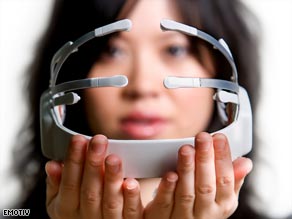
LONDON, England (CNN) -- Be excited, but be scared. A world of mind-blowing possibilities is suddenly being thrust upon the world of video gaming. Detecting your thoughts: the EPOC headset is a breakthrough in brain - computer interfaces.Detecting your thoughts: the EPOC headset is a breakthrough in brain - computer interfaces. The era of thought controlled games has arrived, and soon you could be required only to 'think' to operate a video game. Maybe you'll even have the chance to be completely immersed in a video game 'world'.
The future of gaming is all in the mind - CNN.com
Blogged with the Flock Browser

he Pop Vs Soda Map

308 - The Pop Vs Soda Map « Strange Maps

I would imagine some college professor put this together.
Blogged with the Flock Browser

Living Paycheck to Paycheck On $100,000 - Personal Finance * US * News * Story - CNBC.com

If you are counting the days until the next payday comes around, you’re not alone.And we're not talking Jane and Joe Six Pack here. Some 21 percent of those with salaries of $100,000 or more say they are living paycheck to paycheck, according to a recent survey conducted by CareerBuilder.com.
Living Paycheck to Paycheck On $100,000 - Personal Finance * US * News * Story - CNBC.com
Blogged with the Flock Browser